
Table of Contents
Introduction
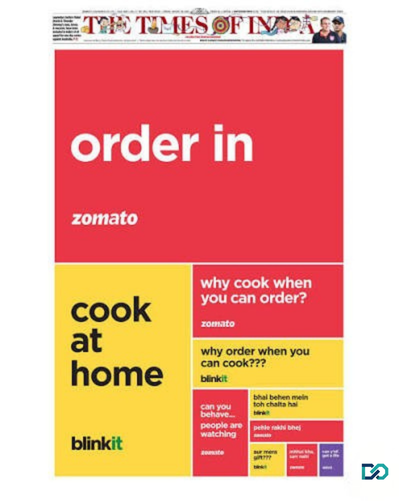
If you opened a newspaper in late August 2026, you might have stumbled onto a full-page ad that didn’t really look like an ad.
It looked like a screenshot of a sibling fight over text messages. On one side, Zomato. On the other, Blinkit. And across a single page, the two brands went back and forth roasting each other in front of the whole country.
Here’s the part that made it land: Zomato and Blinkit aren’t even competitors. They’re both owned by the same parent company, Eternal Ltd. So this wasn’t a corporate rivalry playing out in public.
It was a family squabble, staged in print, timed perfectly to Raksha Bandhan, the festival built around sibling relationships.
This case study looks at what the ad actually said, why it worked as well as it did, and what other marketers can take away from it.
Background: two brands, one family
Zomato bought Blinkit (formerly Grofers) in an all-stock deal back in 2022. Since then, the two have functioned like siblings under the same roof. Zomato does food delivery, Blinkit does 10-minute grocery delivery. Most people know they’re technically related, but it’s not something either brand usually talks about. On the surface, they still feel like two separate apps with two separate personalities.
That quiet family connection is exactly what this campaign chose to expose and turn into a joke.
This also wasn’t the first time the two had done this. Back in 2024, Zomato wished Blinkit a “happy rakhi” on social media and called it an “adopted sis.” Blinkit shot back that it wasn’t adopted; it was acquired. That exchange got a fair bit of attention online. The 2026 print ad basically took that same sibling energy and built a full campaign around it.
The ad: a fight in eight lines
The ad reads like a group chat that spiraled out of control. It escalates line by line:
- Zomato opens with a dig at what Blinkit actually sells: “Why cook when you can order?”
- Blinkit fires back, defending home cooking: “Why order when you can cook???”
- Zomato plays the embarrassed elder sibling: “Can you behave… people are watching”
- Blinkit shrugs it off: “Bhai behen mein toh chalta hai” (this is normal between siblings)
- Zomato pivots to a Raksha Bandhan demand: “pehle rakhi bhej” (send the rakhi first)
- Blinkit counters with its own demand: “aur mera gift???”
- Zomato tries to wrap it up sweetly: “mithai kha, sarr nahi” (eat sweets, don’t give me a headache)
- Blinkit gets the last word, and honestly the most relatable line in Indian advertising this year: “can y’all get a life”
No product shots. No discount codes. No obvious call to action. Just two brand voices bickering exactly the way real siblings do over WhatsApp.
Why it worked
It turned a boring corporate fact into the whole joke. Most companies bury their ownership structure in an annual report footnote. This campaign made “we’re actually owned by the same company” the entire premise. Instead of downplaying the relationship, they leaned into it completely, which is what made the ad feel less like marketing and more like you were accidentally reading someone else’s family chat.
It rode a cultural moment instead of inventing one. Raksha Bandhan already comes loaded with everything this ad needed: rakhi-tying, gift demands, sweets, affectionate bickering. The brands didn’t need to build a new metaphor from scratch. They just mapped their existing back-and-forth onto a festival everyone already understands. That makes for a much easier ad to “get” in the two seconds most people spend on a newspaper page.
It used a chat format in a medium that’s usually static. Newspaper ads are typically one-directional, a brand talking at you. This one used a message-by-message conversation instead, the kind of format people scroll through on their phones every single day. It made an old-school medium feel current.
It stayed in character. This wasn’t a random one-off gimmick. Zomato and Blinkit have spent years building this exact bantering, slightly savage voice on social media, the kind that regularly goes viral on X. The print ad didn’t invent a new personality for either brand. It just extended a personality people already recognized into a new format. That’s why it read as authentic instead of forced.
It got shared for free. Because the ad photographed well and looked like a chat screenshot, people didn’t just see it in the paper; they photographed it and posted it online. Investor and commentator Deepak Shenoy calling it “Brilliant ad!” on X is one example of the campaign jumping from print into social conversation, effectively giving it a second media cycle without any extra spend.
It quietly reinforced both brands’ actual pitch. Buried in the joke is real positioning. Zomato is pushing the convenience of ordering food, Blinkit is defending the case for cooking (and, by extension, grocery shopping). Neither brand had to say “order from us” directly. The humor did that work without ever feeling like a sales pitch.
Why now?
The timing makes sense once you look at the market. India’s quick-commerce space in 2026 is brutally competitive, with Swiggy’s Instamart, Zepto, and others all fighting for the same customers. In a market that crowded, staying top of mind matters just as much as discounts or delivery speed. A campaign people talk about and screenshot costs the same media budget as one nobody notices, but it delivers a lot more reach for that spend.
Zomato has also faced some less flattering headlines around this period, including cost pressure from sustainable packaging rules and restaurant boycotts in a few cities. A lighthearted campaign like this one gives the brand a chance to remind people of its likeable public voice, even while it’s handling messier issues elsewhere.
Takeaways for marketers
- Don’t hide an inconvenient truth. Reframe it. The “same parent company” fact could have been treated as boring or even risky to mention. Instead, it became the whole creative idea.
- Format innovation can matter as much as the message itself. The chat-style layout is what made an old medium feel new again.
- Borrowed cultural relevance beats invented relevance. Riding an existing festival’s emotional core is a lot easier than building a new campaign concept from zero.
- Voice consistency pays off over time. This ad worked because it was chapter five or six of an ongoing bit, not the first attempt. Brands that build a recognizable personality over years get to cash in on it during the moments that matter.
- Design for the screenshot. In 2026, an ad’s real audience isn’t just the people who saw it in the physical newspaper; it’s everyone who later sees a photo of it online. Naturally shareable ads get a second life for free.
Conclusion
The Blinkit-Zomato Raksha Bandhan ad is a good reminder that the best brand storytelling often comes from admitting something true rather than dressing something up. Two brands under one roof turned a structural fact into a genuinely funny, festival-relevant, highly shareable campaign, without a single discount code in sight. In a quick-commerce market this noisy, that kind of earned attention is worth a lot more than another banner promising fast delivery.