
Category: Marketing / Outdoor Advertising / Creative Strategy Brand: Spark Car Wash Market: New Jersey, USA Format: Vehicle wrap (mobile outdoor ad)
Introduction
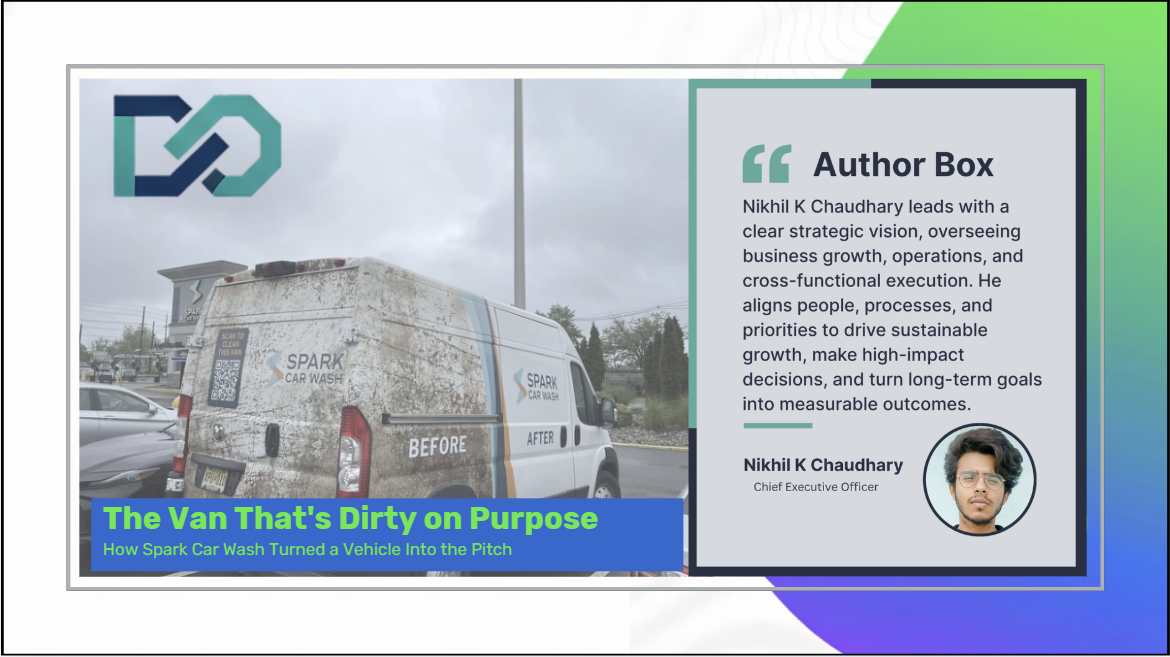
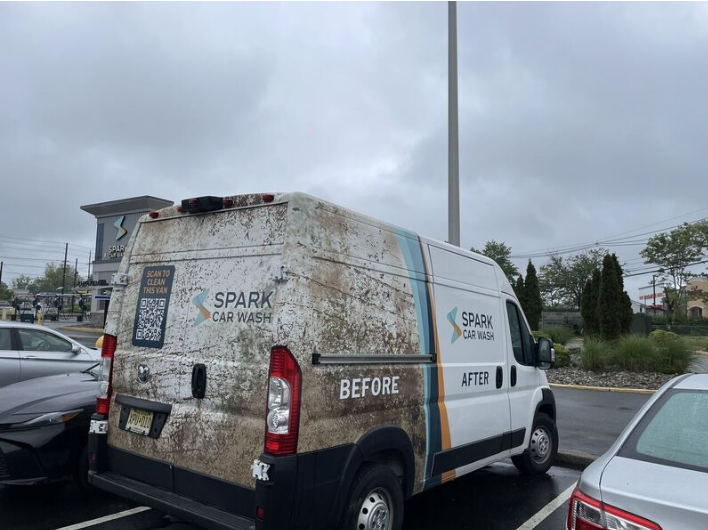
Picture a white work van pulling into a parking lot in New Jersey. The back half looks like it hasn’t seen water in years, caked in mud and grime. The front half is bright, spotless white. Across the two halves, two small words: “Before” on the filthy side, “After” on the clean side.
That’s the entire ad. It’s a car wash driving around in a dirty van on purpose, and it’s one of the smartest pieces of outdoor advertising you’ll see this year.
The brand is Spark Car Wash, and the idea is simple enough that it almost feels like cheating. In this case study, we’ll look at why it works, what it does with location that most brands miss, and what any marketer can borrow from it.
The problem with most outdoor advertising
Here’s the uncomfortable truth about ads on the road: people don’t read them. They glance at them.
You get maybe two seconds, sometimes less, before someone’s eyes move on. A driver, a pedestrian, someone walking out of a store with a cart. That’s your whole window.
And yet most brands treat that window like a brochure. They cram in a tagline, a logo, a phone number, a website, maybe a discount, and then wonder why nobody remembers anything. When you try to say five things in two seconds, people take away zero.
The idea: make the product the creative
Spark skipped the copywriting problem entirely by picking a product with a built-in visual story.
A car wash has the most universally understood before-and-after in existence. Dirty car becomes clean car. Nobody needs it explained. A person understands it in half a second, in any language, from across a parking lot.
So instead of describing that transformation, Spark put it on the van itself. One half of the vehicle is wrapped to look neglected and muddy. The other half is clean and white. The vehicle doesn’t advertise the service. It demonstrates the service.
There’s no headline to read and no pitch to decode. The creative is the product demo.
Breaking down the details
The split design. The dirty half sits at the rear, where grime naturally collects on a real vehicle, which makes it feel believable even though it’s a wrap. The clean half sits near the front. The “Before” and “After” labels are small and unfussy, because the picture already does the talking.
The location strategy. This is the part that’s easy to overlook. A branded van isn’t just a moving billboard, it’s a billboard that parks itself where you want it. A Spark van sitting in a home improvement store parking lot is sitting directly in front of people who own homes, maintain cars, and have money to spend on both. Every stop the van makes is effectively a free, targeted media placement. There’s no ad buy, no booking, no negotiation with a billboard company. The vehicle just goes where the customers already are.
The QR code. Most QR codes on ads are an afterthought, a lazy “visit our website” shortcut that nobody uses. Spark’s version is different because it comes with a hook: “Scan to clean this van.” That’s a call to action with an actual payoff. People want to see what happens. Curiosity does the work that a discount code usually has to do, and it gets someone to pull out their phone in a parking lot, which is a hard thing to make people do.
Why people photograph and share it
It’s not because it’s funny. It’s not really because it’s clever, either, at least not in a showy way.
It spreads because it’s embarrassingly obvious in hindsight. That’s a very specific kind of good idea. The kind where you see it and immediately think, “Why hasn’t every car wash done this?” The best creative often has that quality. It feels so inevitable that the first reaction is a small laugh of recognition, and the second is to show someone else.
That reaction is what turns a van in a parking lot into a photo on social media, which then turns into free reach well beyond New Jersey.
Key takeaways for marketers
- Design for the glance, not the read. If your message can’t land in two seconds, it probably won’t land at all. Cut the copy before you cut the visual.
- Let the product be the creative when you can. If your offering has a clear, visual transformation, show it instead of describing it. Demonstrations beat descriptions.
- Treat movement as a media strategy. A vehicle that travels to relevant places gives you free, contextual placement. Think about where your customers already gather, then put your message there.
- Make the call to action earn its place. A QR code works when scanning it promises something fun or surprising. If the only reward is a homepage, people won’t bother.
- Obvious ideas are underrated. Simple concepts that feel inevitable tend to travel the furthest. If a competitor could have done it but didn’t, that’s usually a sign you found something good.
Conclusion
Spark’s dirty van works because it respects how people actually behave. Nobody reads ads in a parking lot. They notice things, and they remember things that make instant sense.
By turning the vehicle itself into a before-and-after demo, Spark gave people a story they could understand in half a second, a reason to pull out their phones, and a photo worth sharing.
Every car wash in the country could have done this. Spark did. That’s the whole lesson.