
In September 2026, a one minute advertisement turned a little known sports prediction startup into one of the most talked about brands in America.
The company was Novig, a peer to peer sports trading platform backed by $106 million in venture funding and valued at $500 million. The star was Sydney Sweeney, the 29 year old actress already known for turning controversy into commercial success.
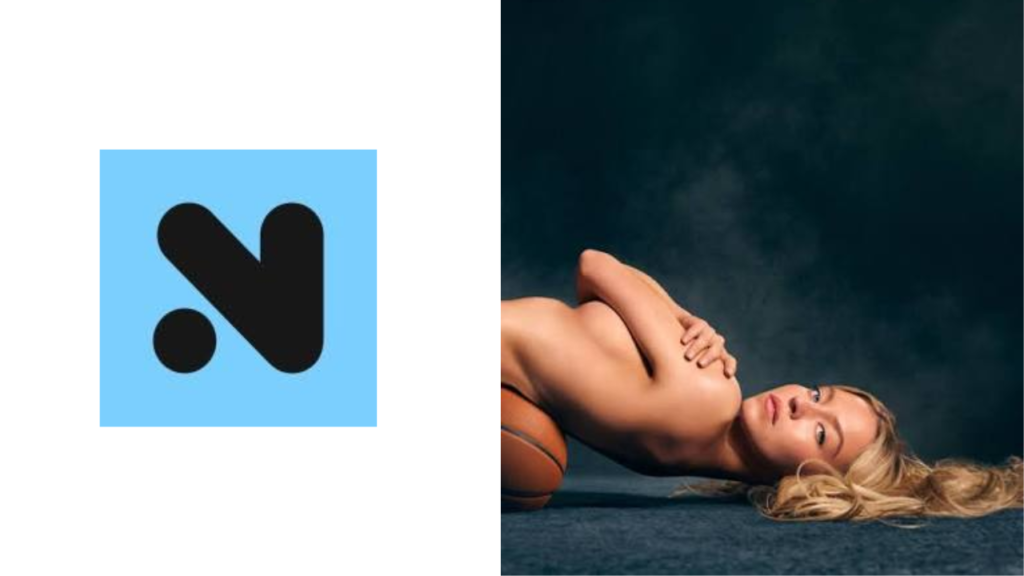
The ad showed Sweeney nearly nude, covering her body with footballs, tennis rackets, and baseball bats, while she delivered the line that Novig is “just sports,” free of politics, war, or death markets. Within four days, the campaign’s Instagram reel had racked up 37 million views.
It also triggered a wave of public criticism from Olympic athletes, professional gymnasts, swimmers, and runners, who argued the ad set back decades of progress toward respecting women in sports for their skill rather than their bodies.
This case study looks at what happened, why Novig and Sweeney chose this approach, what the early data says about whether it worked, and what it means for the two industries colliding in this single advertisement, sports prediction markets and women’s sports marketing.
It draws on reporting from Fox News, CNN, Forbes, Fortune, NBC, TODAY, and market research firm Zappi, along with financial data on Novig’s funding history and Sweeney’s prior campaign for American Eagle, which followed a strikingly similar pattern of backlash followed by strong sales.
Background: Who Is Novig and Why Does It Need Attention
Novig was founded in 2021 by Jacob Fortinsky and Kelechi Ukah while they were students at Harvard. Fortinsky has said the idea began with frustration.
He watched friends who built smart sports betting strategies get limited or banned by traditional sportsbooks the moment they started winning consistently, in the same way a casino might treat a card counter at a blackjack table. Fortinsky wanted to build something different, a platform where users would trade against each other rather than against the house.
The company entered the startup accelerator Y Combinator in 2022. It first tried registering as a regulated sports betting operator in Colorado, then shifted to a sweepstakes model, but neither approach allowed it to operate nationally, and the sweepstakes model drew legal challenges from state regulators.
By 2026, Novig was pursuing federal approval to register as a designated contract market with the Commodity Futures Trading Commission, the same regulatory status held by its larger rival Kalshi. That approval, if granted, would make Novig legal in all fifty states.
Novig’s core pitch is a commission free model for everyday users. The platform charges no fees to retail traders and instead earns revenue from institutional participants.
Novig also claims its peer to peer structure gives users better odds than a traditional sportsbook, since there is no house taking a cut on every trade, and the company states its users are ten times more likely to win than customers of a conventional sportsbook.
Novig raised an $18 million Series A round in August 2025 at a $90 million valuation. Six months later, in February 2026, it closed a $75 million Series B round led by Pantera Capital, with additional backing from Multicoin Capital and Forerunner Ventures, at a valuation of $500 million.
Total funding to date exceeds $106 million across eight rounds, with earlier backers including Y Combinator and former NFL quarterback Joe Montana.
For context on how small that valuation is relative to the industry it is trying to break into, rival prediction markets Kalshi and Polymarket were valued at $11 billion and $9 billion respectively after their own funding rounds in 2025.
This scale gap is the single most important fact for understanding why Novig took the marketing risk it did. A company worth $500 million competing against rivals worth $9 billion and $11 billion cannot win on advertising budget alone. It needs a cultural moment.

The Ad Campaign: What Sweeney and Novig Actually Did
The campaign, publicly framed under the tagline “Just Sports,” launched ahead of the 2026 football season. In the roughly one minute video, Sweeney appears nude or nearly nude for almost the entire spot, using footballs, a tennis racket, and a baseball bat to cover her body in place of clothing, with brief moments in underwear.
She tells viewers that Novig involves “no betting on wars or deaths, and no politics. Just you and your take on sports,” a clear jab at rival prediction markets like Kalshi and Polymarket, which allow trading on geopolitical and news events far beyond the sports world.
Sweeney did not simply license her image for a fee. According to reporting following the launch, she approached Novig directly and specifically asked for an equity partnership rather than a standard paid endorsement.
Fortinsky confirmed this account, and Sweeney became an equity partner in Novig in September 2026, joining the company’s capitalization table alongside its venture investors.
In her own statement, Sweeney explained her approach to brand deals broadly: “I don’t like to just put my face on something. I really want to be able to get into the weeds of it with an amazing team. And I got to meet the Novig team. Jacob’s incredible, and I believed in him as a founder. Being able to be a part of watching this company grow and not just be the face of it is really important to me.”
Novig’s own public statement described the intent behind the campaign in almost identical language to Sweeney’s defense of it. Fortinsky said in a press release that “sports fans deserve a prediction market built specifically for them,” and the company described the ad as a way to bring its “Just Sports” message to life “with confidence, humor and a playful edge.”
The campaign was designed to run nationally across digital platforms, social media, online video, and out of home placements such as billboards throughout the football season, with additional creative and activations planned for the fall. A billboard featuring the campaign appeared prominently in New York’s Times Square.
The Backlash: Athletes Push Back
The reaction from women in professional sports was fast and largely unified. Fox News reported that Australian Olympic gold medalist swimmer Ariarne Titmus, British sprinter Amy Hunt, and former American gymnast Gracie Kramer were among the athletes who denounced the ad.
CNN separately reported that Australian surfer Felicity Palmateer called the campaign “very damaging” for female athletes and young girls trying to get into sport.
Gymnast Gracie Kramer posted a video of herself competing with a pointed caption reading, “Idk what Sydney Sweeney was doing but this is what a woman in sports looks like.” Olympic 100 meter semifinalist Bree Masters shared images of herself training and racing, writing, “Respectfully Sydney Sweeney… This is what women in sport really look like.” Water polo player Tilly Kearns, runner Mary McCarthy, and runner Lucy Davis were also named among the athletes who publicly criticized the campaign on social media, according to reporting compiled by NBC affiliates.
Marketing and public relations professionals interviewed by Fox News offered a more complicated read of the situation. Adrienne Uthe, founder of Kronus Communications, argued that criticism of the ad does not necessarily translate into commercial damage for Sweeney personally.
“Going viral tells me they captured attention. It doesn’t tell me they captured the customer,” Uthe said, adding that social media often distorts which opinions represent a genuine majority view. She also framed the underlying tension as one of competing narratives, one side arguing the ad objectifies women in sports, the other side questioning why an obviously provocative ad should draw outrage at all.
“If you can make it trend, you can make it true,” she said, describing how a loud narrative online can start to feel like consensus even when it is not.
Olivia Bennett, a senior account director at the marketing agency Go Up, offered a sharper critique that separated Sweeney’s personal brand fit from the campaign’s wider social effect. “I can understand the commercial calculation behind choosing Sydney Sweeney,” Bennett told Fox News Digital.
“Novig will know its audience, and Sydney has built a public brand where sex appeal, provocation and controversy consistently generate attention. But this was a national campaign. When you choose someone with such a heavily sexualized and frequently controversial public image, you know the campaign is going to travel far beyond your existing customer base.
The wider reaction was entirely foreseeable.” Bennett added that the more serious problem was that professional athletes themselves were now using the campaign as an example of a broader pattern of disrespect toward women’s sports, calling that a bigger reputational issue than isolated negative comments online.
Sweeney did not issue a formal apology. Instead, she responded on Instagram by sharing a series of past ESPN magazine “Body Issue” covers featuring nude professional athletes, including Serena Williams, Ronda Rousey, Sue Bird, Megan Rapinoe, and Caroline Wozniacki, captioned “It’s gamedayyyy” and tagged to Novig.
Novig itself, through a company statement, said the campaign was about “embracing a fun idea” meant to “cut through the noise and put the focus entirely on sports,” delivered “with confidence, humor and a playful edge.” Neither Sweeney’s representatives nor Novig responded to multiple requests for comment from Fox News, CNN, or NBC News.
4. The Numbers: What the Data Actually Shows
This is the section where a case study earns its keep, because the debate over whether the ad “worked” cannot be settled by opinion alone. Several concrete data points from the days immediately following launch give a clearer picture.
Novig’s Instagram reel of the ad reached 37 million views within four days of release, according to CNN’s reporting, an extraordinary reach for a company that had, until that week, been known only within niche fintech and sports betting circles.
Consumer research firm Zappi ran a controlled test of the ad’s effectiveness, surveying 200 nationally representative online gamblers. The results showed a sharp gender split. Among men surveyed, 73.4 percent said the ad made them more likely to choose Novig, compared with 42.0 percent of women who said the same.
On the negative side, 32.8 percent of women said the ad made them less likely to choose the brand, compared with just 8.4 percent of men. Zappi’s chief marketing officer, Nataly Kelly, summarized the finding directly: “That suggests the creative may be doing what it was designed to do with its core male audience, but at a meaningful cost among women.”
That finding matters because it mirrors, almost exactly, the pattern Sweeney’s earlier campaign for American Eagle produced roughly a year before the Novig ad. In July 2025, American Eagle launched a denim campaign titled “Sydney Sweeney Has Great Jeans,” a pun on “genes” that some critics said carried undertones connected to eugenics and ideas of racial superiority, given Sweeney’s blonde hair and blue eyes.
The backlash was immediate and widely covered. Yet the business results that followed were striking. American Eagle’s stock jumped as much as 30 percent in a single trading session after its second quarter 2025 earnings report, with shares briefly touching around 25 to 30 percent gains depending on the exact measurement window used by different outlets, marking one of the stock’s largest single day gains on record.
The company reported second quarter revenue of $1.28 billion against analyst expectations of roughly $1.23 to $1.24 billion, and earnings per share of $0.45 against an expected $0.20, more than double the consensus estimate.
American Eagle’s president and executive creative director, Jennifer Foyle, told investors the company had gained 700,000 new customers in that quarter alone, with traffic described as “consistently positive” throughout August 2025.
CEO Jay Schottenstein directly credited the Sweeney campaign, alongside a parallel campaign with NFL player Travis Kelce, saying the company had seen “an uptick in customer awareness, engagement and comparable sales.” By the time American Eagle reported its fiscal third quarter results in December 2025, executives said the combined Sweeney and Kelce campaigns had generated a cumulative 40 billion impressions, and the company raised its full year adjusted operating income forecast from a prior range of $255 million to $265 million up to $303 million to $308 million.
American Eagle’s holiday quarter comparable sales guidance was set at 8 to 9 percent growth, roughly four times higher than the 2.1 percent growth analysts had been expecting before the earnings call. However, it is worth noting that at the American Eagle nameplate specifically, where the Sweeney campaign was concentrated, comparable sales growth came in at just 1 percent in the third quarter, actually below the 2.1 percent analysts had forecast, even as the company’s other brand, Aerie, drove most of the quarter’s outperformance with an 11 percent rise in comparable sales. This detail complicates the simple story that the Sweeney campaign alone drove the entire earnings beat.
Taken together, the Zappi data on the Novig ad and the American Eagle earnings data from Sweeney’s prior campaign point to the same underlying pattern. Controversial, sexualized advertising built around Sweeney appears to reliably generate enormous reach and measurable enthusiasm among a core male or general audience, while simultaneously alienating a meaningful share of women, all without clear proof that the controversy itself is what drives the eventual sales or revenue numbers, since other factors, like Aerie’s strong performance or Novig’s broader marketing push, are also in play.
The Wider Context: Prediction Markets and the Fight for Legitimacy
To understand why Novig chose to be this loud, it helps to understand how small and threatened its position is within its own industry.
Sports focused prediction markets have exploded in size over the past two years, but nearly all of that growth has concentrated in two competitors. Kalshi, a broader event contract platform where sports now make up the vast majority of trading volume, was valued at $11 billion following its 2025 funding rounds.
Polymarket, a crypto based prediction market, was valued at $9 billion over the same period. Both companies raised three separate funding rounds in 2025 alone, reflecting explosive investor appetite for the category.
Novig’s $500 million valuation places it far behind both rivals, roughly one twentieth the size of Kalshi and one eighteenth the size of Polymarket by venture valuation.
Fortinsky has been candid that Novig’s argument against Kalshi is not about trading volume, which Kalshi dominates, but about cost structure, arguing that Kalshi’s fee model is, in his words, prohibitively expensive for everyday retail bettors compared with Novig’s commission free approach.
Novig has also positioned itself against a wave of state government pushback aimed at limiting or shutting down sports based prediction markets altogether, a regulatory headwind that has made Kalshi’s rapid growth politically contentious even as its valuation has soared.
Given that backdrop, a hypersexualized celebrity campaign functions less as ordinary brand advertising and more as an attention weapon for a company that cannot compete dollar for dollar with rivals twenty times its size.
Thirty seven million views on a single reel in four days is the kind of reach that a $500 million startup could likely not otherwise buy at any price through conventional paid media placement, and it instantly made Novig a household name in a way years of ordinary product marketing had not.
The Wider Context: Women’s Sports Is in the Middle of a Boom
The controversy also lands at a specific and somewhat ironic moment for women’s sports as a business category, because the industry the ad’s critics say it damages is in the middle of one of its strongest growth stretches on record.
According to Nielsen data released in March 2026, American audiences consumed 46 billion minutes of women’s sports content in 2025 across categories including basketball, tennis, soccer, golf, softball, and volleyball.
Viewers between the ages of 18 and 34, the demographic advertisers value most, grew 70 percent year over year in some of these categories.
The 2025 WNBA season delivered ESPN’s most watched regular season and postseason in the league’s history, averaging 1.3 million viewers per regular season game, up 6 percent year over year, and 1.2 million viewers per postseason game, up 5 percent. Full season national network viewership reached 220.12 million hours, a 16 percent increase over the prior year.
The National Women’s Soccer League saw total 2025 season viewership across Nielsen rated platforms reach 20.16 million, an 18 percent increase over 2024, while average regular season viewership on ESPN rose 61 percent year over year, climbing from 141,000 to 228,000 viewers per game.
Women’s tennis had one of the sharpest single year jumps in all of American television that year. The 2025 US Open Women’s Final averaged 2.4 million viewers on ESPN, a 50 percent increase over 2024, and Wimbledon’s Ladies’ Semifinals averaged 897,000 viewers, the most watched in a decade and a 31 percent increase year over year.
The financial picture tells a similar story. Deloitte’s 2025 report projected global revenues in women’s elite sports would surpass $2.35 billion for the year, up from $1.88 billion in 2024, a 25 percent year over year increase, with investment in the category having grown more than 300 percent over the preceding five years. Goldman Sachs research published in March 2026 found that revenue in United States women’s sports grew 4.5 times faster than men’s sports between 2022 and 2024, and projected that 80 percent of brands plan to invest in women’s sports sponsorships within the next three years, with the category’s value expected to reach $2.5 billion by 2030, a 250 percent increase from 2024, even though women’s sports still represent only about 2 percent of the total United States sports market today.
This is the context that makes the athlete backlash land as more than a simple public relations dispute. Female athletes who have spent years building an audience through genuine athletic achievement, at a moment when that strategy is visibly paying off in record viewership and record sponsorship dollars, are watching a company monetize the phrase “sports” using an actress’s body rather than an athlete’s performance.
Their objection is not only aesthetic. It is a claim about which model of building attention around women in sports actually deserves credit for the industry’s current growth, and a concern that a viral, sexualized shortcut could undercut the harder, slower work of building respect for women’s athletic accomplishment on its own terms.
Analysis: Reading the Two Narratives
Marketing expert Adrienne Uthe’s framing, that the ad has two competing and mutually exclusive narratives circulating at once, is a useful lens for understanding why this controversy has proven so durable in the news cycle rather than fading within a day or two.
The first narrative holds that the ad objectifies women in a way that actively harms the broader project of getting female athletes recognized for skill rather than appearance, a project many of the critics quoted above have spent their entire careers advancing.
Under this reading, the specific timing is what makes the ad especially galling, arriving during a stretch when women’s sports viewership and sponsorship revenue are hitting record highs almost entirely on the strength of athletic performance rather than sex appeal.
The second narrative holds that adults are free to build personal brands however they choose, that Sweeney has agency over how she is depicted, and that outrage over a deliberately provocative ad for an adult targeted product like sports betting is somewhat beside the point, since provocation was always the obvious intent.
Uthe herself endorsed a version of this view, arguing that “women having agency also means allowing women to make choices about their image that other women may not personally agree with,” and that the ad is not a significant departure from the persona Sweeney has built across her career, from her roles in Euphoria and The White Lotus to prior campaigns like the American Eagle jeans ad.
Both narratives can be true at once without contradiction, and that is precisely what makes the case instructive. An advertising choice can be simultaneously rational and even effective for the individual brand and the individual celebrity involved, while still being genuinely damaging to the broader category or community it borrows imagery and cultural relevance from.
Go Up’s Olivia Bennett captured this tension most precisely when she said the campaign “reinforces the image she has already built” for Sweeney personally, while still being “bad for women in sport” as a category, arguing that personal brand fit does not erase the wider impact of the message a national campaign puts into the world.
Strategic Lessons for Executives and Marketers
Attention is not the same as trust, and both need to be measured separately. Thirty seven million views in four days proves Novig succeeded at the narrowest possible definition of a viral marketing goal, but the Zappi survey shows that reach came paired with a real trust cost among women, roughly one in three of whom said the ad made them less likely to choose the brand.
Any executive approving a similarly polarizing campaign should demand both numbers before declaring victory, not just the view count.
A controversial campaign can work commercially even when it is unpopular, and unpopularity does not guarantee it will fail. American Eagle’s stock jumped roughly 25 to 30 percent after an earnings report that followed a widely criticized ad campaign, and the company gained 700,000 new customers in a single quarter.
Executives should resist the instinct to treat online backlash as a reliable predictor of financial outcome in either direction, since the two have shown little correlation in Sweeney’s two most recent campaigns.
Borrowed cultural credibility carries a bill for someone else to pay. Novig’s ad leaned on the growing cultural and commercial relevance of women’s sports without featuring a single professional athlete, at the exact moment that category’s genuine growth was setting historical records built on athletic performance.
When a brand borrows the language and imagery of a category’s momentum without engaging its actual stakeholders, it risks a backlash from the very community whose credibility it is drawing on, precisely because that community has real skin in the game and a public platform of its own to respond from.
Equity partnerships change a celebrity’s incentive to defend a campaign. Sweeney’s decision to become an equity partner in Novig rather than accept a flat endorsement fee means her financial upside is now directly tied to Novig’s long term success, not just this single campaign’s viral spike.
That structure explains, in part, why she chose to respond to criticism with a defiant, unapologetic Instagram post referencing past nude ESPN athlete covers rather than an apology, since walking back the campaign would also mean walking back a bet on her own equity stake.
Scale asymmetry can justify controversial marketing as a rational strategy, not just a reckless one. Novig’s $500 million valuation looks small next to Kalshi’s $11 billion and Polymarket’s $9 billion. A conventional advertising budget was never going to close that gap.
Viewed purely as a strategic response to an unwinnable spending war, the Sweeney campaign reads less like an impulsive decision and more like the only realistic way for a company of Novig’s size to buy national name recognition in a matter of days rather than years.
Conclusion
The Sydney Sweeney Novig campaign is not simply a story about one controversial advertisement. It sits at the intersection of three separate, converging business stories: a small prediction market startup trying to punch far above its financial weight against multi billion dollar rivals, a celebrity whose personal brand has become defined by turning backlash into business value, and a women’s sports industry experiencing record commercial growth precisely because of athletic achievement, at the moment a national ad campaign chose to represent “sports” using a nearly nude actress instead.
None of the three storylines fully explains the controversy on its own, and none of the available data settles definitively whether the campaign was, on balance, good or bad for Novig, for Sweeney, or for women’s sports as a category.
What the numbers do show clearly is that the ad achieved enormous reach, generated a real and measurable trust cost among women, and reopened a decades old argument about how women’s bodies are used to sell products in a sports marketing context that professional female athletes are, for the first time in years, actually winning on their own terms.
FAQs
Q1: What is Novig, and how is it different from a normal sportsbook?
Novig is a peer to peer sports prediction market, meaning users trade against each other rather than against the house, the way a traditional sportsbook like FanDuel operates. The company charges no fees to everyday retail users and instead earns revenue from institutional traders on its platform.
Q2: How much is Novig worth, and who owns it?
Novig closed a $75 million Series B funding round in February 2026, valuing the company at $500 million. Total funding to date is more than $106 million across eight rounds. Ownership is split between cofounders Jacob Fortinsky and Kelechi Ukah, institutional investors led by Pantera Capital, and, as of September 2026, Sydney Sweeney, who joined as an equity partner rather than accepting a standard paid endorsement.
Q3: Why did female athletes criticize the ad so strongly?
Athletes including Olympic swimmer Ariarne Titmus, sprinter Amy Hunt, gymnast Gracie Kramer, and Olympic 100 meter semifinalist Bree Masters argued the ad reduces women in sports to their bodies rather than their athletic skill, at a moment when women’s sports viewership and revenue are hitting record highs based on genuine athletic performance.
Q4: Did the ad actually help or hurt Novig commercially?
The data is mixed. The campaign generated 37 million views on Instagram in four days, an enormous reach for a company Novig’s size. However, a Zappi survey found that while 73.4 percent of men said the ad made them more likely to choose Novig, 32.8 percent of women said it made them less likely to do so, showing a real trust cost alongside the visibility gain.
Q5: Is this the first time Sydney Sweeney has faced backlash over an ad?
No. In July 2025, Sweeney starred in an American Eagle jeans campaign built around the pun “Sydney Sweeney Has Great Jeans,” referencing “genes.” Critics argued the wordplay carried undertones related to eugenics and racial ideals given Sweeney’s appearance. Despite the backlash, American Eagle’s stock jumped roughly 25 to 30 percent after its next earnings report, and the company gained 700,000 new customers that quarter.
Q6: How big are Novig’s competitors compared to Novig itself?
Very large by comparison. Kalshi was valued at $11 billion and Polymarket at $9 billion following their 2025 funding rounds, compared with Novig’s $500 million valuation, meaning Novig is roughly one eighteenth to one twentieth the size of its two biggest rivals.
Q7: How big is the women’s sports industry right now?
It is growing quickly. Nielsen reported that Americans consumed 46 billion minutes of women’s sports content in 2025. Deloitte projected global women’s elite sports revenue would reach $2.35 billion in 2025, a 25 percent increase over 2024, and Goldman Sachs found women’s sports revenue grew 4.5 times faster than men’s sports between 2022 and 2024.
Q8: Did Sydney Sweeney apologize for the ad?
No. Rather than apologizing, Sweeney posted a series of past ESPN magazine covers featuring nude professional athletes, including Serena Williams, Ronda Rousey, and Megan Rapinoe, captioned “It’s gamedayyyy,” suggesting a precedent for athletic nudity in sports media rather than backing away from the campaign.
Q9: What is the biggest business lesson from this case?
That viral reach and financial success do not automatically prove a controversial campaign was a good decision, and backlash does not automatically prove it was a bad one. The two outcomes need to be measured separately, since Novig and Sweeney’s history shows a campaign can generate real anger from an important stakeholder group while still succeeding by the narrower metrics of visibility, brand recognition, or eventual sales.
References
- Wright, Tracy. “Sydney Sweeney’s provocative sports ad ‘reinforces the image she has already built’ despite backlash: expert.” Fox News, September 18, 2026. https://www.foxnews.com/entertainment/sydney-sweeneys-provocative-sports-ad-reinforces-image-she-has-already-built-despite-backlash-expert
- “Sydney Sweeney under fire from athletes over nude sports-prediction ad.” CNN, September 14, 2026. https://www.cnn.com/2026/09/14/sport/sydney-sweeney-ad-backlash-scli-intl
- “Sydney Sweeney reacts to backlash over Novig ad campaign.” NBC Los Angeles. https://www.nbclosangeles.com/news/local/sydney-sweeney-response-public-backlash-resurfaces-amid-new-sports-ad-controversy/3943079/
- “Sydney Sweeney’s Provocative Sports Trading Ad Is Upsetting Female Athletes. See Her Response.” TODAY, updated September 16, 2026. https://www.today.com/health/news/sydney-sweeney-sports-ad-women-controversy-rcna597655
- “Sydney Sweeney’s new sports trading ad draws backlash from female athletes.” NBC Philadelphia. https://www.nbcphiladelphia.com/news/national-international/sydney-sweeney-new-sports-trading-ad-draws-backlash-female-athletes/4462288/
- Elsesser, Kim. “Why Female Athletes Are Fighting Back Against Sydney Sweeney’s New Ad.” Forbes, September 15, 2026. https://www.forbes.com/sites/kimelsesser/2026/09/15/why-female-athletes-are-fighting-back-against-sydney-sweeneys-new-ad/
- Tucker, Hank. “Sports-focused prediction market Novig raises $75 million to challenge Kalshi and Polymarket.” Fortune, February 18, 2026. https://fortune.com/2026/02/18/sports-prediction-markets-novig-kalshi-polymarket-cftc-pantera-multicoin/
- Tucker, Hank. “Betting App Novig Raises $75 Million As It Looks To Join Prediction Market Wave.” Forbes, February 18, 2026. https://www.forbes.com/sites/hanktucker/2026/02/18/betting-app-novig-raises-75-million-as-it-looks-to-join-prediction-market-wave/
- “Novig – 2026 Company Profile, Team, Funding & Competitors.” Tracxn. https://tracxn.com/d/companies/novig/__tqG8JXxT-N6GEGWPjM6GlNa3uT4gdQbZ9ZEf1AT3pzQ
- “Who Owns Novig? Jacob Fortinsky, Sydney Sweeney $500M.” whoistheownerof.com. https://whoistheownerof.com/who-owns-novig-the-ownership-2026/
- “American Eagle stock jumps as it expects a big holiday, raises forecast after Sydney Sweeney ads.” CNBC, December 2 to 3, 2025. https://www.cnbc.com/2025/12/02/american-eagle-aeo-earnings-q3-2025.html
- “American Eagle stock surges 25% after Sydney Sweeney’s ‘good jeans’ ad campaign boosts brand.” CNN Business, September 3, 2025. https://www.cnn.com/business/american-eagle-sales-sydney-sweeney-ad
- “American Eagle shares jump 25% after retailer touts ‘success’ of Sydney Sweeney’s denim campaign.” Fox Business, September 4, 2025. https://www.foxbusiness.com/retail/american-eagle-shares-jump-25-retailer-touts-success-sydney-sweeneys-denim-campaign
- Roush, Tyler. “Sydney Sweeney Ad Boosts American Eagle’s Stock 30%.” Forbes, September 4, 2025. https://www.forbes.com/sites/tylerroush/2025/09/04/american-eagle-shares-surge-30-after-sydney-sweeney-ad/
- Nielsen. “46 Billion Minutes of Women’s Sports were Consumed in 2025.” Nielsen News Center, March 5, 2026. https://www.nielsen.com/news-center/2026/nielsen-46-billion-minutes-of-womens-sports-were-consumed-in-2025/
- “Nielsen: women’s sports hit 46 billion minutes in 2025 and brands are paying attention.” ppc.land. https://ppc.land/nielsen-womens-sports-hit-46-billion-minutes-in-2025-and-brands-are-paying-attention/
- Goldman Sachs Asset Management. “Investing in Women and Sports.” March 2026. https://am.gs.com/cms-assets/gsam-app/documents/insights/en/2026/investing-in-women-and-sports_mar2026.pdf
- “Key takeaways from Deloitte’s Report On Women’s Elite Sports.” thesportzplanet.com, referencing Deloitte’s “Beyond the Billion-Dollar Barrier,” 2025. https://thesportzplanet.com/?p=16186
- “Sports-focused prediction market Novig raises $75 million to challenge Kalshi and Polymarket.” Yahoo Finance / Fortune syndication, February 18, 2026. https://finance.yahoo.com/news/sports-focused-prediction-market-novig-130000608.html
- “American Eagle stock up after ‘success’ from Sydney Sweeney, Travis Kelce ads.” Yahoo Finance, September 2025. https://finance.yahoo.com/news/american-eagle-stock-success-sydney-152053453.html
- Raghunath, Aditya. “American Eagle Stock Soars Over 30% As Sydney Sweeney Campaign Helps Crush Earnings Estimates.” TIKR, September 5, 2025. https://www.tikr.com/blog/american-eagle-stock-soars-over-30-as-sydney-sweeney-campaign-helps-crush-earnings-estimates
- “Sydney Sweeney Sends American Eagle Stock Soaring During After Hours Trading — Meme Stock Buzz Builds.” Benzinga. https://www.benzinga.com/markets/equities/25/07/46594563/sydney-sweeney-sends-american-eagle-stock-soaring-during-after-hours-trading-meme-stock-buzz-builds
- “US women’s sports viewership reached record levels across every major category in 2025.” SGI Europe. https://www.sgieurope.com/consumer/nielsen-46bn-minutes-of-womens-sports-in-2025/120123.article
- “Novig CEO Jacob Fortinsky Feels Breeze At His Back, Despite Prediction Market Headwinds.” Bookies.com, March 24, 2026. https://bookies.com/news/novig-ceo-jacob-fortinsky-prediction-market-interview